We know that the explosion-proof systems in North America are quite different from those in China, the IEC and the EU—not only do they adhere to different standards, but their explosion-proof markings also have significant disparities.
North America generally adopts the standards of the National Electrical Code (NEC). The markings for explosion-proof electrical equipment in accordance with NEC differ greatly from the representation methods stipulated by the IEC. Typically, they do not indicate the type of explosion-proof structure; instead, they only mark the applicable categories, zones, classes and temperature classes.
In contrast, the IEC and China's GB standards indicate the explosion-proof markings, the explosion-proof structures of electrical equipment, categories, classes and temperature classes.
The above two types of explosion-proof markings each have their own advantages and disadvantages. However, in accordance with the requirements of China's national standards and specifications, NEC markings are not suitable for China's national conditions.
For example, the NEC 500 marking: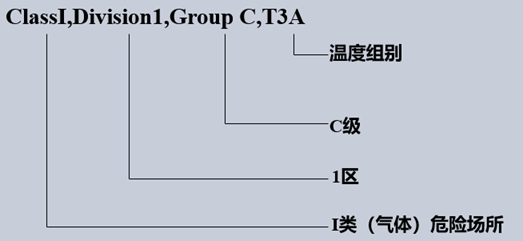
The feature of this marking is that for users, there is no need to understand the type of explosion-proof structure of the electrical equipment—they only need to confirm the applicable environment, the level of flammable and explosive media and the ignition temperature class.
The NEC 505 marking: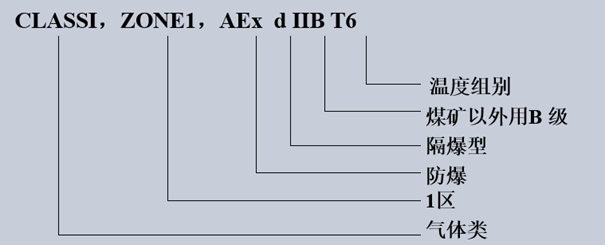
The marking representation of the IEC and China's standards: Ex + explosion-proof structure + category + class + temperature class
For example: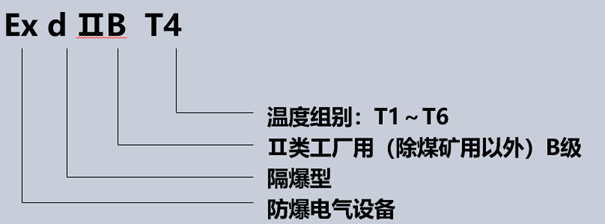
Another example: Ex eb ⅡC T2 Gb
Meaning: Increased safety type, for industrial use, temperature class T2 (the maximum allowable surface temperature of the equipment is lower than 300℃).
Ex db ib ⅡC T6 Gb
Meaning: Combined flameproof and intrinsic safety type, for industrial use, Class ⅡC flammable gases, temperature class T6 (the maximum allowable surface temperature of the equipment is lower than 85℃). Generally, electrical equipment with this explosion-proof marking belongs to explosion-proof electrical systems.

 |
||||||
 |
||||||
|
||||||
 |
||||||
|
||||||
 |



.jpg)